ILLUSTRATED ACTIVITY GUIDE 02 · IMAGINATIVE PLAY
Let’s Pretend Together
Set up a pretend café, take an imaginary expedition, and invent a character’s adventure together.
Choose an activity ↓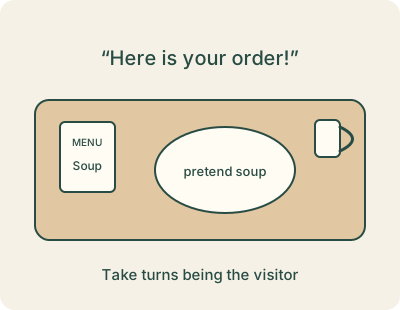
How to use this guide
This guide helps adults get pretend play started without planning a whole performance. Read an activity, offer a simple situation, and let your child decide what happens next. The example conversations are starting points you can change, not lines anyone needs to memorize.
Your role as the adult
Take a role alongside your child. Offer one idea at a time, listen to their response, and follow their interests. You can speak, point, gesture, or use a toy as your character.
What you’ll explore
Taking turns in conversation, describing ideas, and putting events in order.
ACTIVITY 1 · 15–25 minutes
Open a pretend café
A shared pretend game in which one person takes an order and another visits the café.
What you’ll need
- Paper and crayons for a menu
- Optional: unbreakable empty cups and plates, or drawings of them
- A table or a clear floor space
Before you start: Use pretend food and empty cups. No cooking, hot drinks, real money, or small pretend coins are needed. Agree on a space for the café.
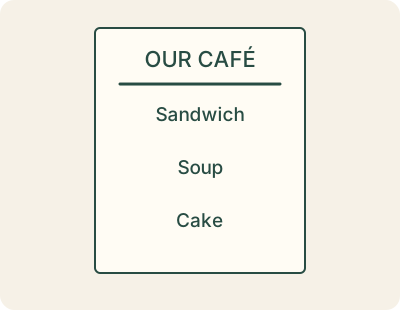
1. Draw three choices on a paper menu.
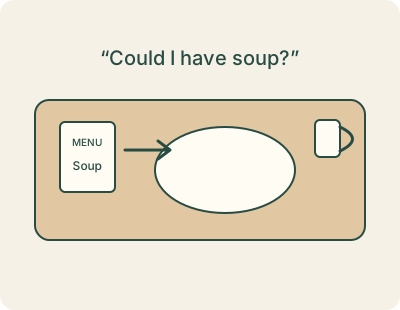
2. Let the visitor point to an order.
3. Serve pretend food, then swap roles.
What to do together
Make a tiny menu
Ask your child to choose three things the café serves. Draw them on paper: a sandwich, a bowl of soup, and a slice of cake, for example. An adult can write the names beside the pictures.
Choose your roles
Decide who will welcome the visitor and who will order. Set out a plate and cup, or draw a place setting. Give the café a name if your child wants to.
Place and repeat an order
The visitor points to or names one menu item. The café owner repeats it back and pretends to prepare it. Encourage a response by asking, “Did I remember your order?”
Add one small surprise
Perhaps the café has run out of soup or a teddy bear wants to join the table. Ask what the café owner would like to do. Accept an imaginative answer and continue the scene.
Swap roles
Let your child try the other role. Repeat the game with a different order, or invite another family member to visit. Tidy your café together when you finish.
Things you can say
- “How will you welcome someone to your café?”
- “What could we offer if that item is all gone?”
Make it simpler
Use two menu pictures. Your child can point to an order while you take both speaking parts.
Take it further
Take an order for two visitors and remember which item belongs to each. Use a quick drawing as an order note.
ACTIVITY 2 · 10–20 minutes
Take an imaginary expedition
A spoken or acted-out journey with a destination and three places to explore.
What you’ll need
- No supplies needed
- Optional: a soft toy to be your travel companion
Before you start: Stay seated or use a clear space for gentle pretend movements. Rivers, caves, and mountains are imaginary; there is no need to climb furniture or jump over objects.
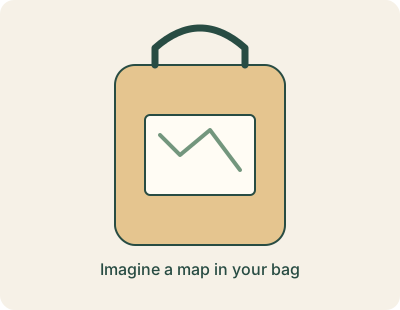
1. Name things to pack in an imaginary bag.
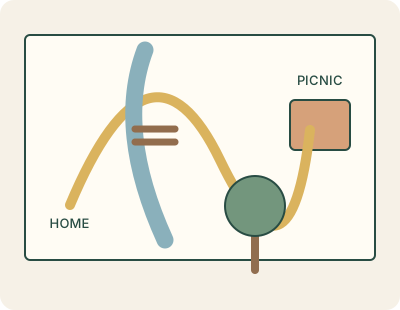
2. Invent a place to explore along the route.
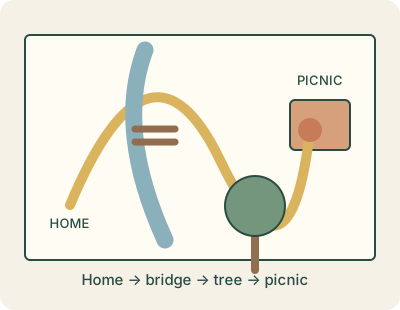
3. Describe what happens when you arrive.
What to do together
Decide where you are going
Choose a destination together: a woodland picnic, a moon garden, or a friendly dragon’s home. Say why you are visiting and who is coming with you.
Pack in your imagination
Each person names one useful item to bring. Pretend to put it into an invisible bag. Ask your child how their item might help on the journey.
Explore the first place
Describe one place along the route: “We have reached a river.” Ask your child what they notice and how the travelers might continue. Use words, gestures, or small comfortable movements to act it out.
Take turns adding places
Let your child invent the next place, then add a third together. Bring back something from the imaginary bag to solve a small problem. A scarf might become a flag; a map might reveal another path.
Arrive and remember
Describe the destination together. Ask each traveler to recall a favorite part of the journey. You can repeat the expedition another day with a different route.
Things you can say
- “What can our travelers hear here?”
- “Which thing from our bag could help?”
Make it simpler
Choose one destination and one place along the way. Offer two choices if your child is unsure what to add.
Take it further
Retell the route backward, from the destination to home. Draw the places afterward if your child enjoys drawing.
ACTIVITY 3 · 10–15 minutes
Make up a character’s adventure
A short original story you create together, one sentence at a time.
What you’ll need
- No supplies needed
- Optional: paper and crayons to draw a favorite moment
Before you start: Tell your child that you will invent the story together. Nobody needs to know the ending yet. A few sentences can be a complete story.
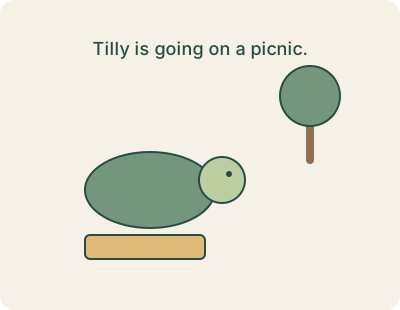
1. Choose a character and a setting.
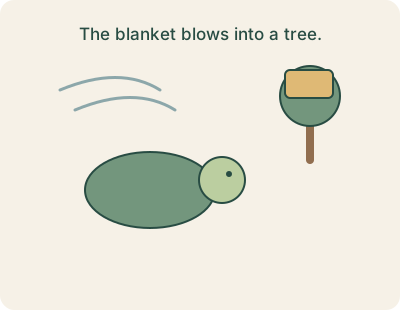
2. Give the character a small problem.
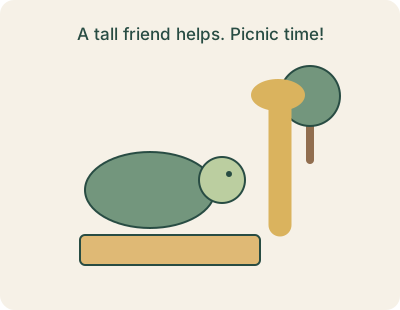
3. Take turns finding an ending.
What to do together
Choose a character and a place
Pick someone for the story and decide where they are. Offer two choices if helpful: a rabbit at the library or a turtle in a garden. Give the character a name.
Give the character a small problem
Start with something concrete: the rabbit cannot find a book, or the turtle’s picnic blanket has blown away. Ask your child what the character notices first.
Add one sentence each
Take turns describing what happens next. Build on the previous person’s idea. If the story stalls, ask what the character could try or who might help.
Make an ending
Decide how the character responds to the problem. Finish by saying what happens afterward. Give the story a title, tell it again, or draw one scene.
Things you can say
- “What could the character try next?”
- “How will we know the adventure has ended?”
Make it simpler
You tell a three-sentence story and let your child choose the character or supply a missing word.
Take it further
Tell the same adventure from the helper’s point of view. What did the helper see before they arrived?
Stay Playful Project · https://stayplayfulproject.org/play-and-learn/lets-pretend-together/